

Buying guide
Corsi-Rosenthal Box Guide
Parts, Assembly and Limits
Build a four-filter Corsi-Rosenthal box with a checked parts list, airflow and sealing steps, filter replacement advice, and a clear buy-versus-build decision.
By thisHUSH EditorialUpdated November 3, 20268 min read1 pick
On this page · Our picks at a glance
Our picks at a glance
- 1
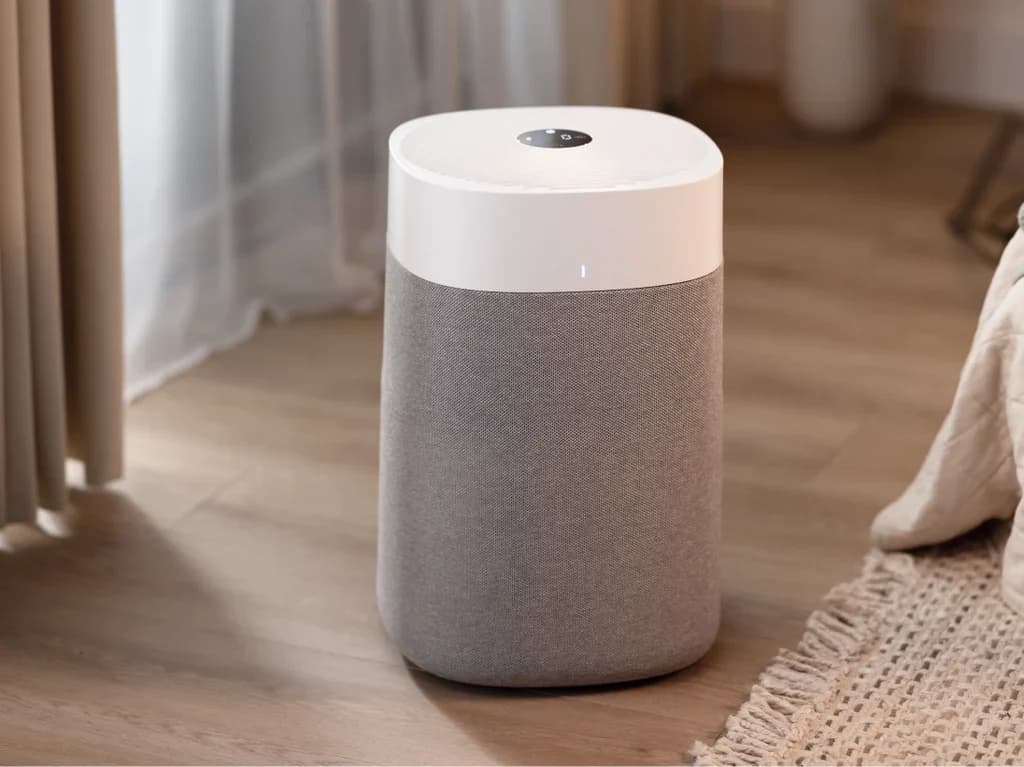
Choose for: A larger-room purifier with automatic controls and app schedules.
Limit: HEPASilent includes an electronic filtration stage; choose a mechanical-only purifier if you want to avoid that stage.
About this guide
thisHUSH covers comfort, quiet and air-quality gear, not health. Nothing on this site is medical advice: for sleep, breathing or hearing concerns, talk to a doctor.
A Corsi-Rosenthal box is a useful DIY option for filtering smoke particles when a commercial purifier is unavailable or unaffordable, provided you can accommodate the build and maintain its filters. Our choice is the documented four-filter layout: MERV 13 side walls, a solid cardboard base, an upward-blowing box fan and an outlet shroud. Choose the Blueair Blue Pure 211i Max instead if you want Auto and Night modes and a documented filter-change procedure without rebuilding taped joints. EPA's DIY guidance explains the evidence and operating requirements.
Quick picks and parts list
These are component choices for the documented layout, not a claim that this exact combination has a measured CADR.
Compare specifications and all conditions
Fan component
- Our choice
- Air King 9723, US 20-inch box fan
- Quantity
- One
- Check before buying
- ETL marking, newer unit, matching manual and grounded outlet
Filter components
- Our choice
- Nordic Pure 20x20x1, standard MERV 13, four-pack, SKU 20x20x1M13-4
- Quantity
- Four identical filters
- Check before buying
- Select MERV 13 and four per box; measure actual frames
Base and shroud
- Our choice
- Cardboard, including suitable fan packaging
- Quantity
- Base plus outlet shroud
- Check before buying
- Trace the assembled parts before cutting
Seals and tools
- Our choice
- Duct tape; scissors or utility knife
- Quantity
- Enough to seal every joint
- Check before buying
- Include fan-to-box gaps; optional weather-stripping can help seal connections
Ready-made alternative
- Our choice
- Blueair Blue Pure 211i Max
- Quantity
- One appliance
- Check before buying
- Choose the purifier rather than a replacement-filter listing
Full comparison table
Swipe to compare. Row labels stay visible.
| Job | Our choice | Quantity | Check before buying |
|---|---|---|---|
| Fan component | Air King 9723, US 20-inch box fan | One | ETL marking, newer unit, matching manual and grounded outlet |
| Filter components | Nordic Pure 20x20x1, standard MERV 13, four-pack, SKU 20x20x1M13-4 | Four identical filters | Select MERV 13 and four per box; measure actual frames |
| Base and shroud | Cardboard, including suitable fan packaging | Base plus outlet shroud | Trace the assembled parts before cutting |
| Seals and tools | Duct tape; scissors or utility knife | Enough to seal every joint | Include fan-to-box gaps; optional weather-stripping can help seal connections |
| Ready-made alternative | Blueair Blue Pure 211i Max | One appliance | Choose the purifier rather than a replacement-filter listing |
Scroll horizontally to see every column
| Job | Our choice | Quantity | Check before buying |
|---|---|---|---|
| Fan component | Air King 9723, US 20-inch box fan | One | ETL marking, newer unit, matching manual and grounded outlet |
| Filter components | Nordic Pure 20x20x1, standard MERV 13, four-pack, SKU 20x20x1M13-4 | Four identical filters | Select MERV 13 and four per box; measure actual frames |
| Base and shroud | Cardboard, including suitable fan packaging | Base plus outlet shroud | Trace the assembled parts before cutting |
| Seals and tools | Duct tape; scissors or utility knife | Enough to seal every joint | Include fan-to-box gaps; optional weather-stripping can help seal connections |
| Ready-made alternative | Blueair Blue Pure 211i Max | One appliance | Choose the purifier rather than a replacement-filter listing |
The materials and airflow layout follow NOAA's four-filter instructions, supplemented by EPA's shroud guidance and Harvard's sealing advice. Keep replacement filters available before smoke arrives, as EPA recommends.
Choose the four-filter version before ordering
The selected design uses four nominal 20 × 20 × 1-inch MERV 13 filters as vertical walls, with cardboard underneath and the fan above. NOAA documents the solid-base layout; EPA's research page includes a four-filter, 1-inch MERV 13 configuration with a cardboard shroud. This combines documented construction guidance with current component choices; it does not reproduce EPA's tested hardware.
Four 1-inch filters, solid base, top fan and shroud
- What changes
- The layout used here
- Buying consequence
- Buy four matching panels and plan access to every taped wall
Thicker filters
- What changes
- EPA identifies thicker filters as a performance improvement; Harvard cautions that brands and media differ
- Buying consequence
- Recheck actual thickness, corner geometry and fan fit; do not reuse cuts blindly
Five-filter box
- What changes
- A filter replaces the solid bottom
- Buying consequence
- EPA calls for supports beneath the bottom filter to permit airflow
Single 4-inch filter and shroud
- What changes
- A smaller alternative to a multi-filter enclosure
- Buying consequence
- EPA identifies it as an option when floor space cannot accommodate multiple filters
Full comparison table
Swipe to compare. Row labels stay visible.
| Configuration | What changes | Buying consequence |
|---|---|---|
| Four 1-inch filters, solid base, top fan and shroud | The layout used here | Buy four matching panels and plan access to every taped wall |
| Thicker filters | EPA identifies thicker filters as a performance improvement; Harvard cautions that brands and media differ | Recheck actual thickness, corner geometry and fan fit; do not reuse cuts blindly |
| Five-filter box | A filter replaces the solid bottom | EPA calls for supports beneath the bottom filter to permit airflow |
| Single 4-inch filter and shroud | A smaller alternative to a multi-filter enclosure | EPA identifies it as an option when floor space cannot accommodate multiple filters |
Scroll horizontally to see every column
| Configuration | What changes | Buying consequence |
|---|---|---|
| Four 1-inch filters, solid base, top fan and shroud | The layout used here | Buy four matching panels and plan access to every taped wall |
| Thicker filters | EPA identifies thicker filters as a performance improvement; Harvard cautions that brands and media differ | Recheck actual thickness, corner geometry and fan fit; do not reuse cuts blindly |
| Five-filter box | A filter replaces the solid bottom | EPA calls for supports beneath the bottom filter to permit airflow |
| Single 4-inch filter and shroud | A smaller alternative to a multi-filter enclosure | EPA identifies it as an option when floor space cannot accommodate multiple filters |
Dimensions need a dry fit. Nordic Pure's separate size FAQ gives its nominal 20x20x1 frame as 19½ × 19½ × ¾ inches. The current product selector leaves its actual-size field blank, and the maker's measuring guidance says to verify dimensions. Measure the delivered filters before cutting cardboard.
With those stated frame dimensions, arranging each panel end against the next panel's face makes a calculated 20¼-inch square filter enclosure, with walls 19½ inches high. The Air King specification sheet lists the fan as 21.38 × 6.38 × 22.5 inches. Turned face-up, its published overall dimensions give a planning footprint of 22.5 × 21.38 inches, and a conservative height allowance of 19½ + 6.38 inches, plus cardboard and tape. These are planning calculations, not measured finished dimensions; check projections, support and stability on the actual fan.
Fan component: Air King 9723
The 9723 has a 20-inch blade, three-speed rotary control and ETL listing, according to its official specifications. Its linked operating manual describes a fused Blue Plug and a three-prong grounded plug. Buy a new unit and verify its marking and date information: EPA's guidance calls for a 2012-or-later fan with UL or ETL marking. An old fan with the same model name does not establish that requirement.
There are two important documentation limits. Air King's product page markets the fan for commercial spaces, while its linked manual says it is not intended for commercial, industrial or agricultural settings. Follow the manual's narrower use; this guide covers a home build. The manual also says mounting other than specified voids the manufacturer's warranty, so consider the DIY mounting a material tradeoff.
The 9701 is a separately sold stand, not the fan. Order the 9723 itself. Neither the fan's airflow specification nor its ETL listing supplies a CADR or certification for the assembled cleaner.
Filter components: Nordic Pure MERV 13 four-pack
Choose 20x20x1M13-4, the standard MERV 13 pleated four-pack. Nordic Pure's official variant data confirms that SKU and pack quantity. Its selector also offers other ratings and media: “MERV 13 + Carbon” and “MERV 13 Tru Mini Pleat” are different selections. Keep this parts list consistent rather than assuming all variants reproduce the same airflow.
A four-pack supplies the walls, with no spare set. Other pack quantities are offered, but count filters before ordering. Nordic Pure's FAQ explains that individual frames may lack a printed MERV rating; check the box's rating sticker and order details. Locate each airflow arrow before assembly. For this box, arrows point toward the empty center, not toward the room.
Assembly: arrows, base, seals, fan and shroud
Work with the fan unplugged. NOAA specifies inward filter arrows, upward fan discharge, a cardboard bottom and sealed fan-to-box gaps. Harvard explains why tight joints matter: air should pass through the filters instead of bypassing them.
Dry-fit the walls
Stand the matching filters upright in a square. Point every airflow arrow inward. Check the fan's fit before committing to tape.
Seal the enclosure
Tape each vertical corner without crushing the frames. Trace and cut the cardboard bottom, then tape its entire perimeter.
Fit the top fan
Confirm it blows upward, then unplug it before mounting. Follow NOAA's cord-routing illustration and protect the cord from pinching. Tape the fan to the box and bridge gaps with cardboard.
Add the outlet shroud
Cut cardboard to fit the discharge face, with an opening matching the blade sweep as EPA specifies. Keep the existing grille in place and keep cardboard clear of moving parts.
Check before running
Inspect the corners, base and fan connection for gaps. Confirm the assembly is stable, the outlet is clear and the switch and plug remain accessible.
The shroud covers the outlet's corners around the circular blade area. Harvard describes it as preventing backward airflow around the fan's corners. Trace this fan's blade area through its grille; a hole size from instructions for another fan is not automatically the right cut.
Plan replacement access now. Our practical suggestion is to leave accessible tape ends at the fan joint and label the filter specification and assembly date on the base. A taped box needs a way to open again; do not bury the filter edges beneath decorative coverings. Recheck arrows and reseal the enclosure whenever filters are changed.
Operation and replacement during smoke events
Plug the fan directly into the appropriate wall outlet. EPA says not to use an extension cord; the Air King manual also cautions against power strips and other cord-connected devices. Keep the cord away from traffic, do not use a damaged or malfunctioning fan, do not leave children unattended around it, and maintain working smoke detectors. Keep all filter faces and the upward outlet clear of obstructions.
Check the filters daily during wildfire smoke. EPA says to replace them when dark brown or grey, dirty, or smelling of smoke, and at the end of a smoke event. Its research found dirty filters could make DIY cleaners almost ineffective. Have replacements ready rather than relying on a calendar reminder alone.
Nordic Pure's ordinary HVAC interval is 30–90 days for 1-inch and 2-inch filters; that is not a DIY smoke-event service promise. Unplug the fan before opening the box, replace loaded filters, then rebuild the seals and confirm the arrows. EPA also identifies increased sound and heat as possible DIY drawbacks. If the build's sound makes it impractical where you need it, consider the appliance option below or our quiet bedroom purifier guide.
What this build establishes about smoke, CADR and HEPA
CADR means clean air delivery rate: EPA describes it as the volume of filtered air a cleaner delivers. EPA's chamber research used simulated wildfire smoke; a result for that particular fan, filter and assembly does not become the rating of another build. We assign this parts list no measured CADR, room-size rating or sound level.
MERV describes filter particle-capture performance. EPA lists HEPA separately and says its HEPA efficiency specification is not based on the MERV system. Call this a MERV 13 DIY particle cleaner. Adding filters does not establish a HEPA label for the finished box.
Harvard's DIY guidance says these particle-filter devices do not remove gaseous pollutants. Smoke particles, smoke gases and lingering odors are different buying problems; this standard filter selection does not establish gas or odor removal. EPA also says portable cleaners do not replace ventilation. A box is not evidence of whole-home performance.
- Yes: Documented design for filtering airborne particles
- No: No established gas-removal capability for this particle-filter build
- Partly: Room results depend on the actual components, assembly, filter condition and space
Ready-made alternative: Blueair Blue Pure 211i Max
Choose the 211i Max if your priority is an appliance with automatic controls and a defined replacement procedure. Its official manual documents Auto mode, which responds to particle readings, and Night mode, which uses the lowest speed and dimmed lights. Manual fan-speed controls work on the unit; the app adds remote control and filter monitoring.
Blueair
A large-room purifier with a 360-degree intake, a washable fabric pre-filter, PM1/PM2.5/PM10 sensing and app control, rated by Blueair at smoke CADR 435 and 674 sq ft.
Check package and model options
- 435 CFM smoke CADR
- 674 sq ft room
- Washable fabric pre-filter + particle and carbon filter (HEPASilent: mechanical plus electrostatic)
- 23 dB lowest setting
The manual shows a washable fabric pre-filter and a replaceable particle-and-carbon main filter. It explicitly says not to wash or reuse the main filter. That documented maintenance process is the reason for this alternative pick. It is not a claim of equal performance at the same sound level as the DIY box. Use the maker's smoke CADR in the product card when sizing a commercial unit; see our air purifier buying guide for the broader shortlist.
How we choose
This guide draws on documents, without physical product testing: EPA's research, NOAA's instructions, maker documentation and Harvard's sealing guidance. Dimensions calculated from specifications are labeled. New component ASINs remain unverified, so their buying links go to the makers.
Verdict
Build the four-filter, solid-base box with an outlet shroud if you can accommodate its footprint, inspect the filters and reopen the seals for replacement. Buy the Blue Pure 211i Max if Auto/Night controls and a documented appliance maintenance routine better fit your room. For either choice, prioritize the operating instructions and replacement-filter supply over an unsupported whole-room performance promise.
Official sources
Start with EPA's research and operating guidance and NOAA's assembly sheet. Component manuals, the exact filter variant and supplementary construction guidance are linked in their sections above.
Frequently asked questions
Does a Corsi-Rosenthal box work for wildfire smoke?
EPA research found that DIY air cleaners can reduce smoke particles, with shrouds and multiple filters improving performance. That supports the design, but does not give every home-built box the same CADR. Fan, filter media, assembly and dirty filters affect results. Use MERV 13 filters, check them daily during a smoke event, and replace them when dirty or smelling of smoke.
Which way should the filter arrows point?
On the four-filter, fan-on-top design, all filter airflow arrows point inward toward the empty center. The fan then blows upward out of the box. NOAA's assembly instructions show this direction and call for sealing gaps between the fan and filter box. Check the arrows before taping the corners and confirm the fan's discharge direction before mounting it.
How often should I replace Corsi-Rosenthal box filters?
EPA says to check filters daily during wildfire smoke events and replace them when dark brown or grey, dirty, or smelling of smoke. It also calls for replacement at the end of a smoke event. There is no fixed DIY service life that fits every room. Nordic Pure's ordinary HVAC replacement interval should not be treated as a guaranteed service interval for a DIY smoke cleaner.
Is a MERV 13 Corsi-Rosenthal box a HEPA purifier?
Describe this build as a MERV 13 particle cleaner. EPA distinguishes MERV filter ratings from the HEPA efficiency specification; buying MERV 13 filters does not establish that the finished box is HEPA. Harvard's DIY guidance also says particle-filter builds do not remove gaseous pollutants. A smoke-particle result therefore does not establish removal of smoke gases or odors.
Related guides
Comparison · Air Purifiers
Coway Airmega 250 vs 400: Room Fit, Controls and Filter Costs
Choose the Coway Airmega 250 or 400 by room volume, floor space and filter costs, with clear 250S/400S differences and the exact replacement sets to order.
Comparison · Air Purifiers
Blueair 211i Max vs 311i Max: Room Size, Filters and Which to Buy
Choose the Blueair 211i Max or 311i Max by room size, footprint and controls. Compare current CADR figures, confusing model names and replacement-filter fit.
Comparison · Air Purifiers
Coway Airmega Mighty vs Mighty2: AP-1512HH and AP-1512N Compared
Choose the right Coway Mighty: compare Mighty2 and AP-1512HH airflow, filters, controls and noise, decode similar names, and decide if upgrading makes sense.